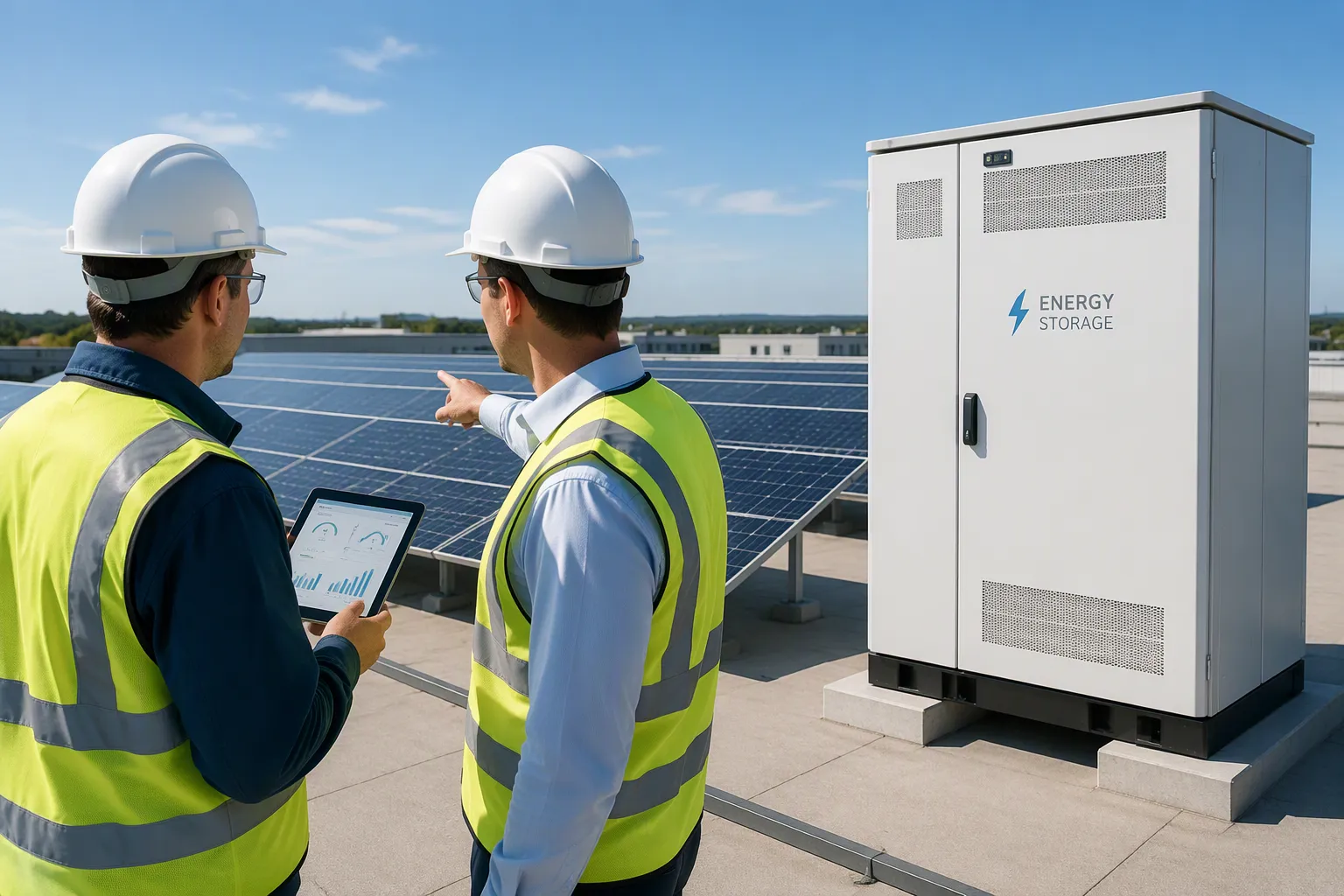
The storage system, not the PV array, usually decides whether your commercial solar project pencils out. Most selection mistakes happen before you request any quote. Vendors then send different chemistries, architectures, and capacity figures, and you cannot tell which numbers to trust. To select the right energy storage system, size it first, compare options, stress-test the ROI, then vet suppliers.
Key Takeaways
-
Size your battery system correctly by matching power and capacity to your load profile.
-
Compare AC-coupled and DC-coupled systems and battery chemistries to fit your project needs.
-
Vet suppliers using a scorecard and demand safety certifications and clear warranty terms.
How to Select the Right Energy Storage System: Sizing Basics
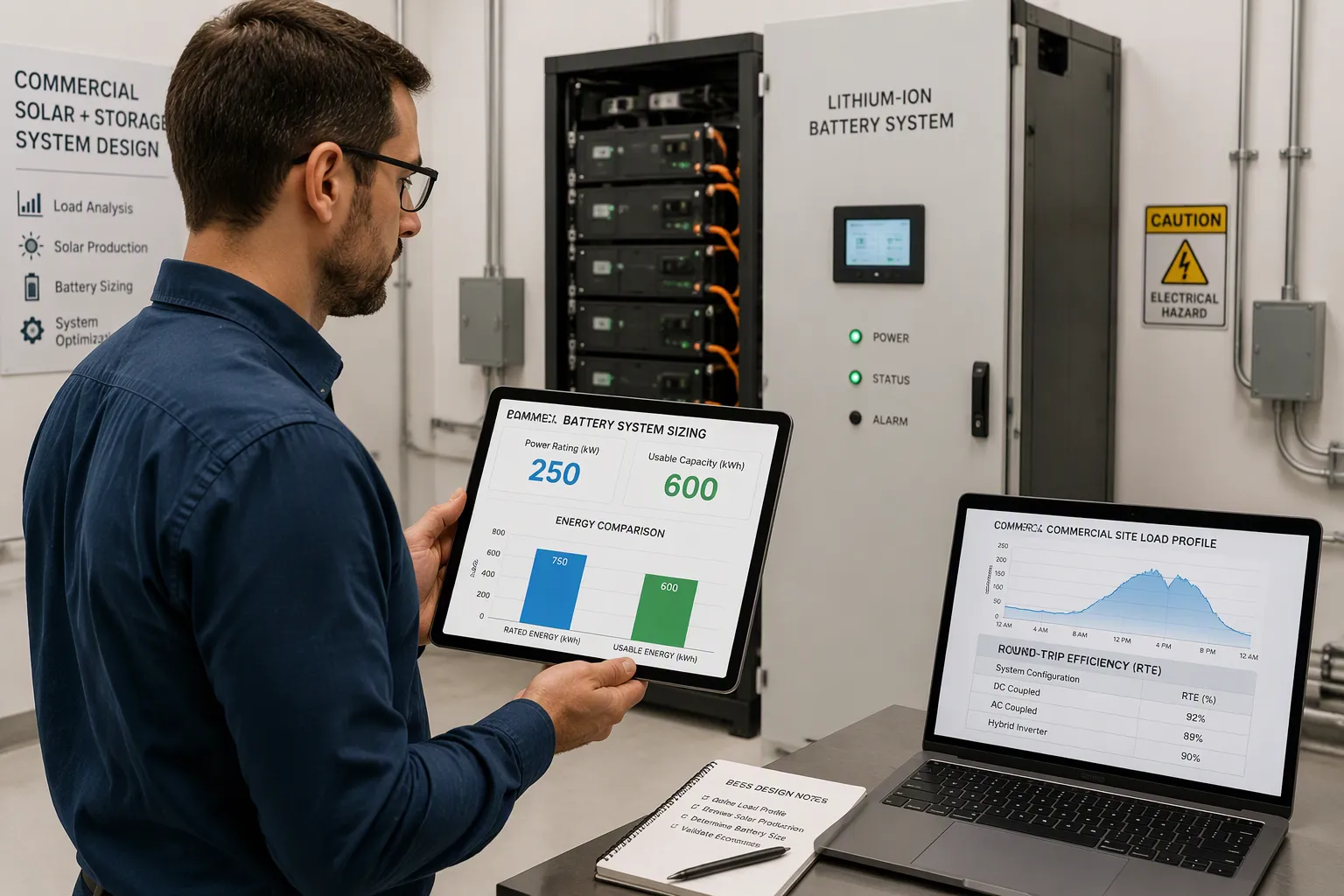
Battery systems dominate commercial storage because they store electricity directly and discharge it when your business needs power. Sizing is the first step, and it decides everything that follows. Get the numbers wrong here, and no chemistry or warranty can rescue the project.
kW vs. kWh: Power Rating and Usable Capacity
Two specifications carry most of the weight. The power rating, measured in kW, tells you how much power the system can deliver or absorb at one moment. Usable capacity, measured in kWh, tells you how much energy it can store and release over time. A system can have a large tank and a small pipe, or the reverse. Your load profile decides which limit binds first.
Round-trip efficiency is the third specification, and buyers often overlook it. Electricity is converted, stored, managed, and converted again, with losses at every step. Cell resistance turns energy into heat, cooling systems consume power, and AC/DC conversions each lose a fraction. Small efficiency gaps compound under daily cycling:
|
System Capacity |
Cycles Per Year |
Round-Trip Efficiency |
Annual Energy Loss |
|---|---|---|---|
|
100 MWh |
365 |
90% |
3,650 MWh lost |
BESS Sizing With a Worked Example
Start with a simple estimate: usable energy equals load power multiplied by discharge duration. A project needing 50 kW for 2 hours requires about 100 kWh of usable energy. Treat these figures as illustrative assumptions, not measured performance.
Nameplate capacity will not deliver that 100 kWh. According to Ace Battery's comparison of rated versus usable energy, usable energy typically falls within 80%–95% of rated capacity, a shortfall of roughly 5%–20% driven by depth of discharge and round-trip efficiency. Depth of discharge matters on its own:
Most modern lithium-ion batteries have DoDs ranging anywhere from 80% to 95%, with many best-in-class solutions sporting 100% depth of discharge and a much longer lifespan.
Divide your energy requirement by the DoD, then divide again by round-trip efficiency, and you approach a realistic nameplate figure. Add margin for operating reserve, temperature, and degradation. Thermal performance drives available capacity and aging, so cooling strategy is a sizing decision, not an accessory. Peak-shaving projects need more analysis still: 12–24 months of interval load data, demand-charge rules, the charging window, and battery power limits. Both oversizing and undersizing hurt ROI.
Comparing Architectures, Chemistries, and ROI
AC-Coupled vs. DC-Coupled Systems
Your coupling choice depends on whether the solar array already exists. AC-coupled systems keep the existing solar inverter and add a separate battery inverter. That makes AC coupling the more affordable path for a retrofit, because you preserve equipment you already own. DC-coupled systems route electricity from the panels straight to the battery over a DC bus. Fewer conversions mean higher charging efficiency from solar, and a single hybrid inverter can cut equipment duplication in a new build. DC coupling also creates one point of common coupling, which reduces interconnection study costs compared with multiple connection points.
Match the architecture to your project stage. New-build solar-plus-storage projects in the hundreds-of-kilowatts range suit DC coupling, especially when you value PV-to-battery round-trip efficiency. Retrofits and projects needing consistent performance across grid charging and solar charging fit AC coupling well. Evaluate cost in two layers: upfront installation and long-term operating value. This step matters when you select the right energy storage system for an existing array.
Battery Chemistry and Payback Drivers
Chemistry sets your cycling profile and your space budget. LFP cells typically deliver roughly 3,000–8,000+ cycles, while NMC cells deliver roughly 1,000–3,000 cycles. LFP also offers a larger thermal safety margin and needs no nickel or cobalt. NMC wins on energy density, at roughly 200–300 Wh/kg against 90–205 Wh/kg for LFP, so it fits space-constrained sites. For daily-cycled stationary storage, LFP usually improves lifecycle value; NMC remains appropriate where compact size outweighs cycle life.
Now stress-test the ROI. Build savings from electricity bill reductions and demand-charge reduction, then subtract operating costs and lifecycle cost. Label every assumption clearly and avoid promising savings you cannot document. Chemistry, architecture, and cycling profile all feed the same payback model.
Vetting ESS Suppliers With Data and Standards
Building a Supplier Scorecard
A scorecard turns a stack of brochures into a comparable set of facts. Score every vendor on the same criteria: usable capacity at your site conditions and at year ten, power rating, round-trip efficiency stated AC-to-AC with auxiliary loads included, system architecture, and energy management capabilities. Add safety documentation and certifications, warranty terms, manufacturing capability, and after-sales service. Use a shared 1–5 scale across technical fit, evidence quality, delivery capability, integration scope, and after-sales support. Record the supporting evidence beside every rating, and assign an owner and date to each open gap.
Safety documentation deserves its own line. Ask for UL 9540 system-level certification, UL 9540A test reports at cell, module, and unit levels, UL 1973 for modules and packs, UL 1741 for inverters, and IEC 62619 for industrial lithium cells. Many jurisdictions require both UL 9540 certification and UL 9540A test reports before granting project approval. A certified cell does not mean the full system is certified, so demand all three UL 9540A test levels.
Warranty terms vary widely, and the headline number rarely tells the whole story:
A representative performance guarantee reads: "We guarantee 80% capacity after 10 years" — but only if the system is cycled once daily, kept at 15–25°C, never discharged below 20%, avoids grid charging (for ITC compliance), limits depth of discharge to 90%, and operates exactly per a lengthy operational manual.
Commercial systems in the 20 kWh to 2 MW range typically carry around 10 years of coverage, rated 5,000 cycles at 80% depth of discharge. Performance warranties for larger projects can run 15–20 years and cover power output, energy availability, throughput, and degradation limits. Score the conditions attached to each guarantee, not just its length.
From Specs to a Confident Purchase
Standardized performance data supports comparison, risk mitigation, financing, and deal closing. Issue one common load-profile model to every vendor. Require identical outputs: year-one and year-ten usable capacity, bill savings on your actual tariff, auxiliary energy, and full levelized cost of storage. Then evaluate on three axes — technical fit, commercial terms, and service capability. Store 5–15 minute consolidated data in your asset performance management system so you can verify guarantees later.
Choosing the right solar storage solution starts with understanding your project's electricity demand, solar generation profile, operating objectives, and local grid requirements. Commercial buyers and EPC contractors should compare battery capacity, power rating, system architecture, energy management capabilities, safety documentation, warranty terms, and lifecycle costs before making a purchasing decision. PNG Solar's relevant energy storage products and technical specifications can then be evaluated against these project requirements to identify a suitable configuration. Verify the actual product range, models, capacity, power, and technical parameters before publication.
Size your system by load profile, adjusting kW and kWh for efficiency and degradation. Compare architectures and chemistry against project needs, stress-test ROI assumptions, then score suppliers on documented performance and warranty terms.
Confident decisions rest on project-specific data, not brochure capacity figures. That distinction separates a sound purchase from an expensive guess.
Assemble your load data and demand-charge history before requesting quotes. Every supplier then competes on the same basis, and you can select the right energy storage system with evidence behind you.
FAQ
How do I know whether my project needs more kW or more kWh?
Check your load profile first. A short, intense demand spike calls for higher power rating. A long overnight backup window calls for more usable capacity. Your interval load data and demand-charge history reveal which limit binds first.
Can I add storage to my existing solar array?
Yes. AC-coupled systems keep your current solar inverter and add a separate battery inverter, which preserves equipment you already own. This path usually costs less than replacing working hardware for a retrofit.
Which battery chemistry suits daily commercial cycling?
LFP cells typically deliver roughly 3,000–8,000+ cycles, so they usually improve lifecycle value for daily-cycled stationary storage. NMC cells offer higher energy density at roughly 200–300 Wh/kg, which fits space-constrained sites better.